
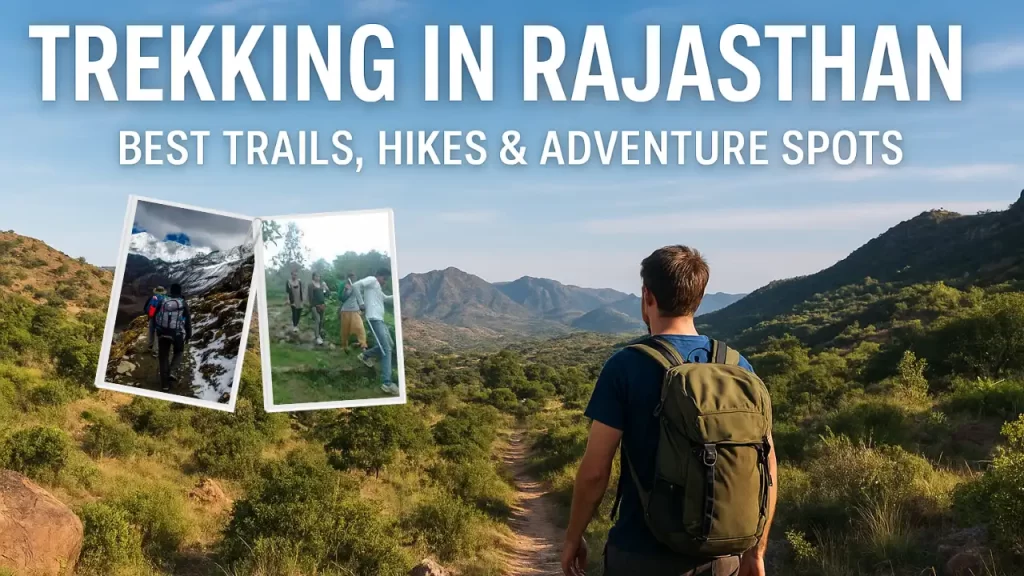
Mount Abu and Alwar offer Rajasthan’s best treks, with easy to moderate trails, forest routes, and fort hikes lasting 1–5 hours, ideal for beginners.
Trekking in Rajasthan centers on the Aravalli range, where routes combine short climbs, shaded forest paths, and historic landmarks. Mount Abu suits beginners with structured trails like Guru Shikhar, while Alwar adds wildlife and fort-linked hikes around Sariska. Most treks require basic fitness, not technical skills.
What makes Rajasthan unique for trekking?
Rajasthan is a unique place to trek in India. It offers a unique combination of wildlife, heritage trails, and Aravalli hills for trekking on various terrains that do not feature extreme altitudes or snow-covered areas.
- Aravalli Range – One of the oldest mountain ranges on earth, ideal trekking routes.
- Cultural Experience – Many trekking routes take you through local villages to experience authentic Rajasthani food and learn about local cultures.
- Wildlife – Many trekking routes go through forests and sanctuaries where you can see birds, leopards, deer, and more.
- Historical Trails – Many treks through Rajasthan include forts, temples, and ancient pathways that have been used by people over centuries.
The variety of adventure tourism combined with culture creates an opportunity for a totally unique trekking adventure in India.
Trekking in Rajasthan: Mount Abu Trails.
Top Mount Abu treks include Guru Shikhar, Trevor’s Tank, and Achalgarh routes, offering easy to moderate hikes with forest views and scenic peaks.
What are the best trekking trails in Mount Abu?
- Guru Shikhar Trek: It is the highest peak in Rajasthan with panoramic Aravalli views. For route details and viewpoint tips, see Guru Shikhar Mount Abu guide.
- Trevor’s Tank Trail: This trail leads into a forest. You can also listen to birds chirping and perhaps spot peacocks. Furthermore, partridges and even birds that migrate from far-off nations.
- Achalgarh to Guru Shikhar Trek: It begins at Achalgarh Fort. You can have both history and nature together on this walk up to Guru Shikhar.
How difficult are Mount Abu treks and how long do they take?
Mount Abu treks are easy to moderate, taking 1–5 hours depending on trail length, with well-marked paths, gradual climbs, and forest terrain.
Difficulty Level
Most treks in Mount Abu fall into easy to moderate categories:
- Easy trails: Great for new hikers and families as these trails are flat and short.
- Moderate trails: Include gradual climbs, rocky sections, and longer distances
Mount Abu has no high altitude or difficult trail, making it safe for new hikers with no previous experience.
Time Required
Trek duration varies by route:
| Trail | Distance | Time Required | Difficulty |
|---|---|---|---|
| Guru Shikhar Trek | ~3 km | 1.5–2 hours | Easy–Moderate |
| Trevor’s Tank Trail | ~2 km | 1–1.5 hours | Easy |
| Achalgarh to Guru Shikhar | ~5 km | 3–5 hours | Moderate |
Terrain & Conditions
- Rocky paths with uneven surfaces
- Forest trails with shade and wildlife presence
- Gradual inclines, no steep ascents
This makes treks physically manageable but not effortless—basic fitness is enough.
Practical Takeaway
If you can walk 4–5 km comfortably, you can complete most Mount Abu treks without difficulty.
Many trails pass through forest zones within the Mount Abu Wildlife Sanctuary, known for birdlife and occasional leopard sightings.
What are the best trekking trails in Alwar?
Alwar trekking includes Bala Quila, Sariska forest trails, and Siliserh Lake routes, combining wildlife, lakes, and historical forts in one region.
Famous Treks in Alwar You Must Try.
- Bala Quila to Siliserh Lake Trek: This trek begins at the old Bala Quila Fort and descends to Siliserh Lake. You experience history, hills, and water all together.
- Sariska Tiger Reserve Trails: These are guided. You can spot deer and antelopes and, if you are lucky enough, even a tiger. So, don’t miss these Alwar trekking spots.
- Jaisamand Lake Hilltop Trails: These short hikes allow you to view the lake from the top and have panoramic views of Alwar’s hills.
How difficult are Alwar treks?
Treks here are also easy to medium. All you need to do is follow the Alwar hiking guide. Some forest walks are lengthy, but most are suitable for travelers who do not wish to rush.
Alwar is unique because forts, lakes, and wild animals can be viewed together in a place. The Sariska forest adds a thrilling element to every trek.
Best Season: Winter would be ideal for Alwar as well. Clear skies and cool winds make trekking enjoyable and safe.
Safety & Travel Tips for Rajasthan Treks.
- Hiking is fun if you are safe and prepared.
- Always have a local guide, particularly in Sariska. It’s easy to get lost, as well.
- Bring enough water, good walking shoes, and sunscreen to protect yourself from the sun.
- Do not disturb or litter in the woods. It is valuable to read the trekking instructions.
- Finally, write down some emergency numbers. And take maps, in case your phone does not work.
What to Pack for Trekking in Rajasthan.
| Item | Why You Need It |
|---|---|
| Water bottle. | To remain cool and not become dehydrated under the scorching sun. |
| Good trekking shoes. | To walk safe on rocks and bumpy roads. |
| Hat & sunscreen. | To safeguard your skin from sunlight. |
| Snacks & energy bars. | To provide you with instant energy while trekking. |
| Camera or binoculars. | To capture moments and observe birds or animals. |
Local Fun & Experiences During Trekking.
Moving on to better experiences. Trekking in Rajasthan is never only about trekking. You get to experience the local culture and people as well.
- Mount Abu: You can have Rajasthani and Gujarati cuisine after trekking. Also, take hot snacks around Nakki Lake, and shop for handicrafts in the vibrant market. Activities in Rajasthan are endless.
- Alwar: Taste the Alwar ka Mawa sweet here. You can also visit forts and havelis that narrate the history of the royal times. This combination of trekking and culture makes your journey more complete and cheerful.
Trekking in Rajasthan: Mount Abu vs Alwar Comparison.
Trekking in Rajasthan: Trails in Mount Abu & Alwar has more.
| Feature | Mount Abu | Alwar |
|---|---|---|
| Landscape. | Hill station with green trees. | Forests, lakes, and tiger reserves. |
| Best For. | Beginners & view lovers. | Wildlife enthusiasts & history buffs. |
| Add-On Fun. | Nakki Lake boat ride, Dilwara Temple. | Bala Quila, Sariska Jeep Safari, Mawa sweets. |
| Vibe. | Cool, happening hill town. | Quiet, less touristy |
If you want more outdoor experiences beyond trekking, explore these unique experiences in Rajasthan.
Best Time for Trekking in Rajasthan
The best time for trekking in Rajasthan is October to March, when temperatures are cooler, skies are clear, and trails are safer for long hikes.
- Winter (Nov–Feb) – Cool weather, perfect for long treks.
- October & March – Pleasant temperatures, good for both desert and mountain treks.
- Avoid Summer (April–June) – Extremely hot, not safe for trekking.
- Monsoon (July–Sept) – Some treks are green and beautiful, but trails may be slippery.
So, if you want the best experience, plan your Rajasthan treks in the cooler months.
What is the difference between trekking and hiking in Rajasthan?
Hiking in Rajasthan means short, easy day walks, while trekking involves longer multi-day routes through forests, hills, and remote villages.
- Hiking – Short walks, easy trails, done in a day. Example: Nakki Lake hike in Mount Abu.
- Trekking – Longer journeys, sometimes 2–3 days, covering forests, hills and villages. Example: the Ranakpur to Kumbhalgarh trek.
Both are fun and adventurous, but trekking in Rajasthan gives you a deeper experience with nature and culture.
Trekking Packages & Tours in Rajasthan
Many local tour operators offer trekking packages. These usually include guides, meals, transport, and camping. Popular options are
- Mount Abu Trekking Tours – Half-day to full-day treks with wildlife sanctuary visits.
- Kumbhalgarh Wildlife Trek – Guided trek with overnight camping in the forest.
- Desert Trekking Packages – Camel safaris, desert hikes, cultural shows, and tent stays.
- Customized Rajasthan Adventure Tours – Multi-day treks covering villages, forts, and natural landscapes.
Hiring a guide or joining a group is recommended, especially for first-time trekkers. Local guides know the terrain, ensure safety, and share cultural stories.
Conclusion: Best Trails for Trekking in Rajasthan
Trekking in Rajasthan is not just about adventure—it’s about nature, history and culture together. From the highest peak of Guru Shikhar to the desert sands of Jaisalmer, Rajasthan has something for everyone.
If you love walking through history, spotting wildlife or camping under the stars, Rajasthan is waiting for you. Plan your trip in winter, choose your trail and get ready for an adventure of a lifetime.
FAQs about Trekking in Rajasthan
Rajasthan trekking costs range from ₹800 for short hikes to ₹8,000 for multi-day packages, depending on location, duration, and inclusions.
The top treks are Guru Shikhar in Mount Abu, Kumbhalgarh Wildlife Sanctuary, and Ranakpur trails. For a unique experience, try Jaisalmer desert trek.
November to February is best, with temperatures between 10–25°C. October and March are workable but warmer. Avoid April to June due to extreme heat above 40°C.
It is highly recommended to hire a local guide, especially in wildlife sanctuaries like Sariska or Kumbhalgarh. Guides will help with navigation and safety and also share cultural and historical information.
Yes, most of the treks in Rajasthan are easy to moderate. Short trails in Mount Abu and desert hikes in Jaisalmer are beginner and family friendly. Longer treks like Ranakpur–Kumbhalgarh require moderate fitness.
Yes, entry permits are required for Sariska Tiger Reserve zones. You must go with an authorized guide. Independent trekking inside core wildlife areas is not allowed.
Yes, families can do short hikes and desert walks. But multi day treks in forests may be too tiring for children under 10 years.






















Leave a Comment