
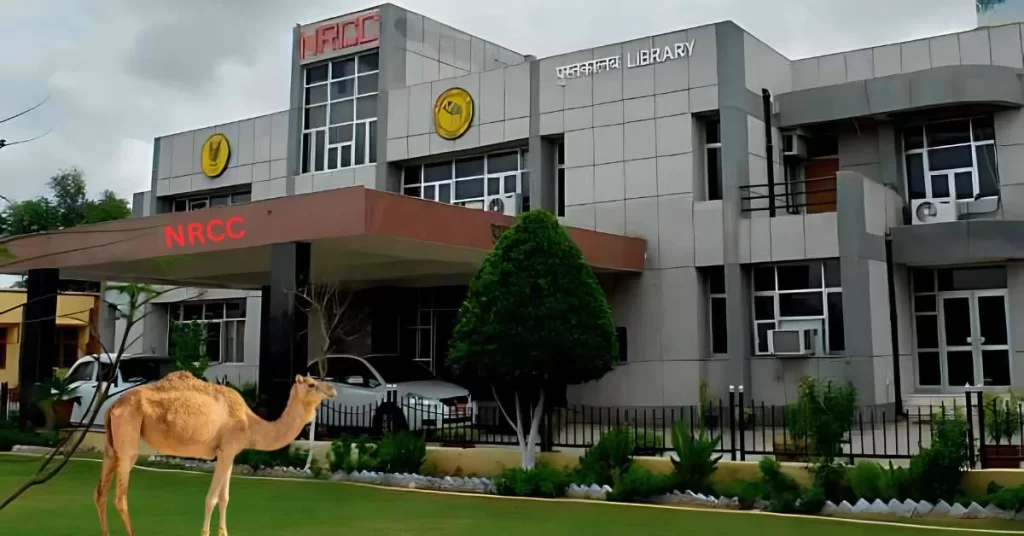
The National Research Centre on Camel (NRCC) in Bikaner is India’s only ICAR institute for camel research, breeding, and conservation, located 8 km from the city.
NRCC was established in 1984 to improve camel health, productivity, and desert use. Visitors see camel breeds, research facilities, and milk products. The centre operates in the afternoon and is best visited when camels return from grazing.
Why is NRCC important in India?
The NRCC uses ICAR research to improve the breeding, health, and productivity of camels. The NRCC also supports desert economies while also helping to conserve the camel population of India.
Researchers study camel nutrition, diseases, and breeding. They also produce camel milk products and train local communities in better income and animal care.
Where is NRCC Bikaner located?
NRCC is located 8 km from Bikaner city in Rajasthan and operates under ICAR, making it easy to reach by taxi, auto, or private vehicle. The centre sits on the outskirts of Bikaner. Most visitors reach it within 15–20 minutes from the city using local transport or rental vehicles.
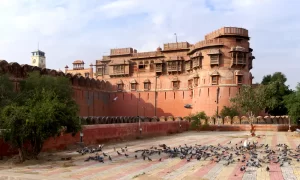
You can also explore nearby attractions like Junagarh Fort to extend your visit.
How Camels Work in Transport, Farming, and Daily Life in Rajasthan
In Rajasthan, camels are used to transport and farm. They carry goods, pull carts, and help farmers in dry areas (where machines often do not work).
People use camels to transport goods through deserts, use farm equipment, and travel long distances. Because of their strength and endurance, camels are ideal in low water and rugged terrain.
Camels are used to carry goods, pull carts and help agriculture in dry areas. In areas where machines fail due to sand and lack of water, farmers depend on them.
You can experience similar desert landscapes at Desert National Park.
How do Raika communities support camel rearing?
Raika communities in Rajasthan rear camels, depend on them for income, and maintain traditional knowledge that supports camel breeding and care.
- They teach them how to treat camels in a better manner so that the camels stay healthy and strong.
- The next time you meet a camel, don’t forget it is more than a rather tall, strange-looking animal.
- It is a hardworking, helpful companion who has been serving people in Rajasthan for centuries. And thanks to efforts like the NRCC and the loving Raika families. Camels are finally getting the love and attention that they so rightfully deserve.
- Book a trip to Rajasthan and explore Rajasthan places.
Things to See and Do at National Research Centre on Camel, Bikaner
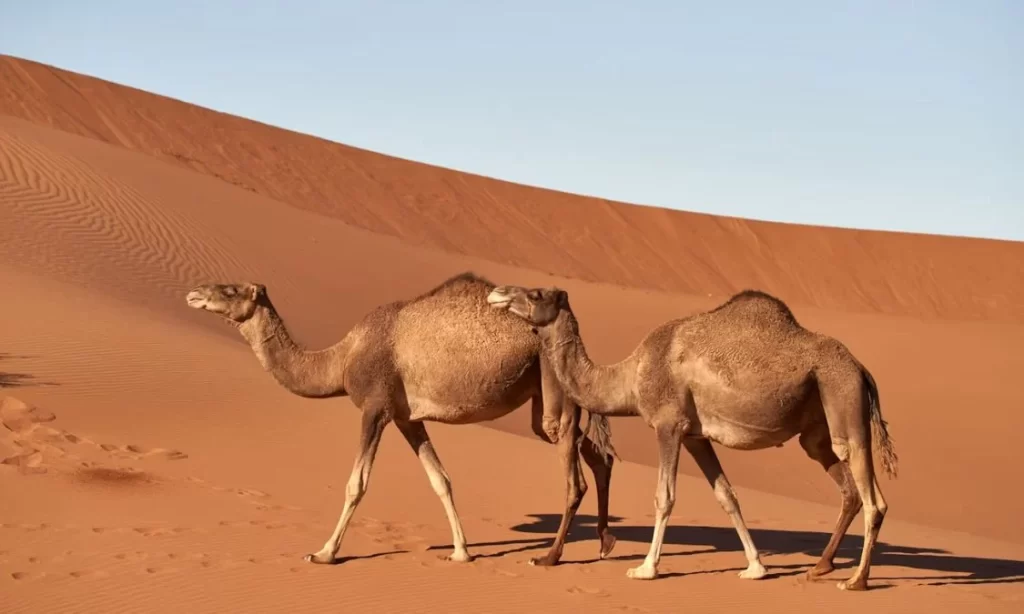
Visitors can experience camel farms, ride a camel, visit a museum, try products made from camel milk, and learn how camels survive in the desert while there.
A visitor can ride camels, see live demonstrations, and buy products from stalls at the center. Visitors observe breeding facilities and learn how people use camels for transportation and agriculture.
What can you do at NRCC Bikaner?
- Ride camels and see the desert area.
- Visit the camel museum with its exhibits.
- Try camel milk products such as ice cream and chocolate.
- Watch breeding and how the camels are looked after.
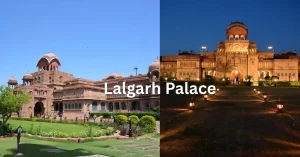
Many travelers combine this visit with Gajner Palace for a full-day itinerary.
What can you see inside the Camel Museum at NRCC Bikaner?
The Camel Museum at NRCC Bikaner displays camel breeds, anatomy models, and desert adaptations, explaining how camels support transport, farming, and survival.
- Camel breeds found in India, including regional types
- Camel body structure and anatomy models
- Adaptations that help camels survive desert conditions
- Role of camels in transport, farming, and daily life
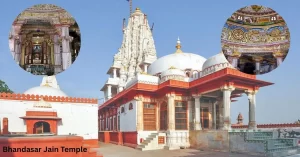
This experience complements other heritage sites like Bhandasar Jain Temple.
What camel breeds can you see at NRCC Bikaner?
NRCC houses breeds like Bikaneri, Jaisalmeri, and Kachchhi camels, allowing visitors to observe their traits, behavior, and role in desert survival.
Visitors see camels grazing, resting, and interacting in open enclosures. Staff maintain these breeds for research, breeding programs, and conservation work.
How is NRCC linked to the Bikaner Camel Festival?
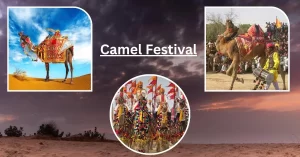
NRCC supports the Bikaner Camel Festival by showcasing camel breeds, promoting awareness, and highlighting the cultural and economic value of camels.
During the festival, visitors see decorated camels, races, and performances. The event highlights camel culture and attracts tourists to Bikaner each year.
You can read more about this event in detail at Bikaner Camel Festival.
NRCC Bikaner Timings and Best Time to Visit
NRCC Bikaner Timings
The NRCC Bikaner opens from 2:00 PM to 5:30 PM daily, except Sundays and public holidays. Visitors should arrive by 2 PM to explore the center fully.
The centre runs only in the afternoon. Early arrival helps you cover the museum, camel farm, and product stalls before peak activity begins later in the day.
Best Time to Visit NRCC Bikaner
The best time to visit NRCC Bikaner is around 3 PM when camels return from grazing and between October and March when desert temperatures remain manageable.
Camel herds return in the afternoon, making this time the most active period. Winter months offer better conditions for walking and exploring outdoor sections of the center.
Winter is also the best season to explore destinations like Sam Sand Dunes.
What is the entry fee of NRCC Bikaner?
NRCC Bikaner charges a small entry fee, usually around ₹30–₹50 for adults, while children may pay less or enter free depending on current visitor rules.
The fee may change based on management rules or events. Visitors should confirm the latest ticket price at the entrance before planning their visit.
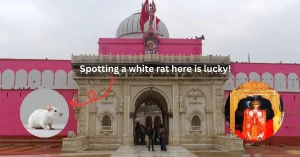
Budget travelers often include NRCC in broader trips like Karni Mata Temple.
FAQs
The Camel Breeding Farm (National Research Centre on Camel) in Bikaner is open to visitors daily from 2:00 PM to 6:00 PM, except on Sundays and public holidays when it remains closed. The best time to visit is around 3:00 PM, when hundreds of camels return from their desert outing, offering a unique and memorable experience.
NRCC stands for National Research Centre on Camel, an ICAR institute in Bikaner dedicated to camel research, breeding, and desert ecosystem support.
Visitors can reach NRCC Bikaner by taxi, auto, or private vehicle, as it is located 8 km from the city and connects through local roads.
NRCC Bikaner remains open daily except Sundays and public holidays, so visitors should check the day before planning their visit.
Bikaner is called the Camel Capital of India due to its large camel population, NRCC research center, and deep cultural reliance on camels.
NRCC Bikaner was established in 1984 under ICAR to support camel research, breeding, and conservation in India’s desert regions.


















Leave a Comment