
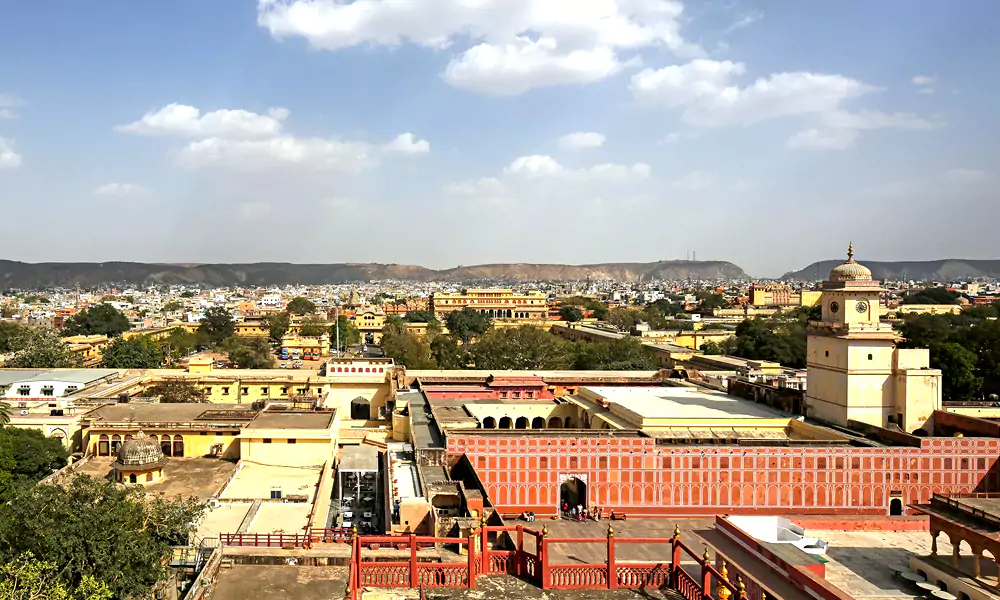
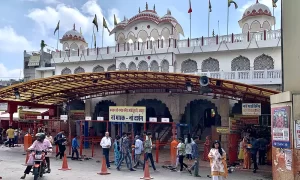
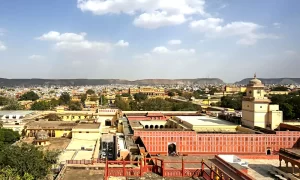
City Palace Jaipur stands in the old city near Hawa Mahal and Jantar Mantar. Maharaja Sawai Jai Singh II built the palace after founding Jaipur in 1727. Today, visitors explore Chandra Mahal, Peacock Gate, royal courtyards, museums, and Diwan-i-Khas inside the palace complex.
The palace still houses Jaipur’s royal family in a private section. Visitors can also see royal costumes, weapons, paintings, manuscripts, and giant silver vessels that Guinness World Records recognized as the world’s largest sterling silver objects.

Quick Information About City Palace Jaipur
| Detail | Information |
|---|---|
| Location | Old City, Jaipur |
| Opening Time | 9:30 AM |
| Closing Time | 5 PM |
| Night Visit | 7 PM to 10 PM |
| Entry Fee | Starts from INR 200 |
| Student Ticket | Starts from INR 100 |
| Royal Grandeur Ticket | Starts from INR 3000 |
| Famous Attraction | Peacock Gate |
City Palace Jaipur Timings and Ticket Price
City Palace Jaipur opens daily from 9:30 AM to 5 PM. The palace also runs a night visit from 7 PM to 10 PM. Standard tickets cover museums, courtyards, and public sections inside the palace complex.
Royal Grandeur tickets include guided access to Chandra Mahal and private royal areas. Indian students can get discounted entry after showing a valid student ID.
| Ticket Type | Price |
|---|---|
| Adult Entry Ticket | INR 200 |
| Student Entry Ticket | INR 100 |
| Royal Grandeur Adult Ticket | INR 3000 |
| Royal Grandeur Student Ticket | INR 1500 |
Many visitors also explore nearby Hawa Mahal after visiting the palace.
History of City Palace Jaipur
Maharaja Sawai Jai Singh II built the City Palace Jaipur between 1729 and 1732 after founding the city of Jaipur. The palace served as the royal residence and administrative center of the Kachwaha Rajput rulers.
Later rulers expanded the palace complex over different periods. They added courtyards, gates, museums, and royal buildings. Today, Jaipur’s royal family still lives in a private section of the palace.
Amber Fort also reflects the royal history of Jaipur’s rulers.
Architecture of City Palace Jaipur
Layout and Design
The palace combines Rajput, Mughal, and European architecture in one complex. Builders used marble gates, carved arches, courtyards, jharokhas, and painted doorways across different sections.
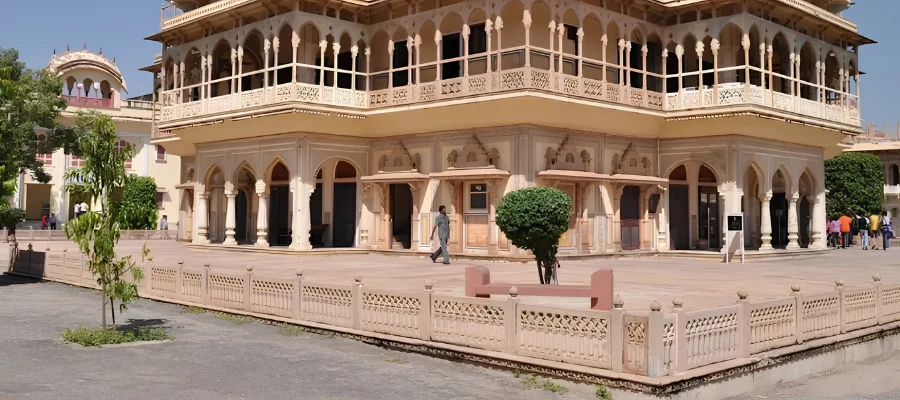
The complex includes Chandra Mahal, Mubarak Mahal, Diwan-i-Khas, Diwan-i-Aam, museums, and Pritam Niwas Chowk.
Visitors interested in Rajput architecture often explore Nahargarh Fort in Jaipur.
Mubarak Mahal
Maharaja Madho Singh II built Mubarak Mahal in the late 19th century for royal guests and ceremonies. The building follows Indo-Saracenic architecture with Rajput, Islamic, and European design styles.
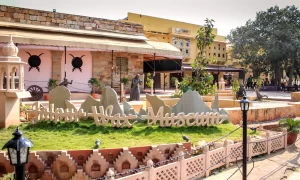
Today, the museum displays royal costumes, textiles, and traditional garments.
Chandra Mahal
Chandra Mahal is a seven-story palace inside the complex. Jaipur’s royal family still uses part of the building as a private residence. Rambagh Palace also reflects Jaipur’s royal lifestyle and palace culture.
The palace contains painted walls, mirror work, royal rooms, and historic decorations. Visitors with Royal Grandeur tickets can enter selected sections inside the palace.
Diwan-i-Khas and Diwan-i-Aam
Diwan-i-Khas hosted private meetings and royal gatherings. The hall displays two giant silver vessels called Gangajalis, which Guinness World Records recognized as the world’s largest sterling silver objects.
Diwan-i-Aam served as the public audience hall for ceremonies and official events.
Pritam Niwas Chowk
Pritam Niwas Chowk forms the inner courtyard of the palace. The courtyard contains four seasonal gates with different colors and designs.
The Peacock Gate attracts most visitors for its peacock artwork, colored glass, and hand-painted patterns.
Suggested Visit Route Inside the Palace
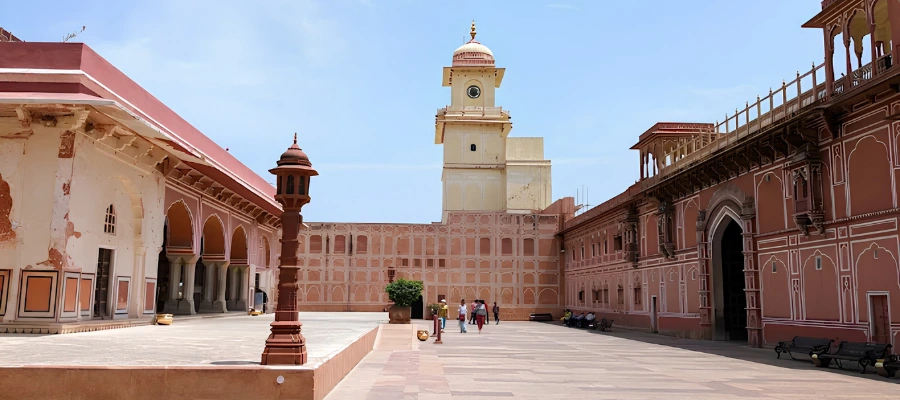
Most visitors start from Mubarak Mahal and then move toward Pritam Niwas Chowk, Peacock Gate, Diwan i Khas, and Chandra Mahal sections.
By following this route, visitors should be able to see all of the museum areas and main attractions without having to move in reverse through busy courtyards.
Significance of City Palace Jaipur
Cultural and Historical Importance
The historical significance of both Jaipur and the Kachwaha Rajput rulers is housed in the palace through its museum collections of royal armaments, manuscripts, paintings, clothes, and ritual artifacts from various time periods.
The complex also served as Jaipur’s political and administrative center for many years.
Symbol of Royalty
The palace still represents Jaipur’s royal legacy. Unlike many historic forts in Rajasthan, the royal family still lives in a private residential section inside the complex.
Visitors can explore public museums, courtyards, and royal buildings during their visit.
Best Time to Visit City Palace Jaipur
Visit City Palace Jaipur between October and March for comfortable weather and easier walking conditions inside the large palace complex. Morning visits usually offer shorter ticket lines, fewer tour groups, and clearer photos at Peacock Gate and Pritam Niwas Chowk.
Many visitors avoid weekends and public holidays because museum sections and courtyards become crowded during peak tourist season.
Seasonal Experience at City Palace Jaipur
| Season | Visitor Experience |
|---|---|
| Winter | Cooler weather and larger crowds |
| Summer | Smaller crowds and high daytime heat |
| Monsoon | Better outdoor photos and fewer tourists |
How to Reach City Palace Jaipur
By Air
Jaipur International Airport stands around 13 kilometers from the palace. Visitors can hire taxis or use local transport from the airport.
By Train
Jaipur Junction railway station stands around 5 kilometers from the palace. Auto rickshaws and taxis are easily available outside the station.
By Road
Jaipur connects with major cities through national highways and state highways. Visitors can reach the palace through taxis, buses, or private vehicles.
First-time visitors can also read Rajasthan travel tips before planning their trip.
Best Places to Visit Near City Palace Jaipur
| Place | Distance | Best For |
|---|---|---|
| Hawa Mahal | 350 meters | Photography |
| Jantar Mantar | 200 meters | Astronomy Instruments |
| Albert Hall Museum | 2.5 kilometers | History |
| Jal Mahal | 6 kilometers | Lake View |
Which Ticket Should Visitors Choose
| Ticket Type | Best For |
|---|---|
| Standard Ticket | Museums, courtyards, Peacock Gate |
| Royal Grandeur Ticket | Chandra Mahal and private royal sections |
| Night Visit Ticket | Evening palace experience |
Best Time of Day to Visit City Palace Jaipur
Morning visits usually offer smaller crowds, faster entry, and better lighting for photography. Most tour groups arrive between 11 AM and 2 PM during winter months.
Visitors who want quieter museum sections should avoid weekends and public holidays.
Best Photography Spots Inside the Palace
| Location | Best Time for Photos |
|---|---|
| Peacock Gate | Morning |
| Pritam Niwas Chowk | Before Noon |
| Chandra Mahal Courtyard | Early Morning |
| Diwan-i-Khas | Midday |
Walking and Accessibility Information
Visitors walk through courtyards, museum halls, and stair sections during the tour. Comfortable footwear helps during longer visits, especially for senior visitors and families with children.
Some restricted palace sections include stairs and narrow pathways.
Travel Tips
Dress Code and Footwear
Wear comfortable clothes and shoes during your visit. Visitors walk through courtyards, museums, and stair sections inside the palace.
Guided Tours
Guided tours help visitors understand the palace history and royal collections. Audio guides also support self paced visits.
Photography Rules
Visitors can take photos in most outdoor areas. Some museum sections restrict flash photography, tripods, and professional video equipment.
Morning visits usually provide better light for photos at Peacock Gate and Pritam Niwas Chowk. Many photographers also visit Patrika Gate during the morning hours.
Things Many Visitors Miss Inside the Palace
- Gangajalis silver vessels inside Diwan i Khas
- Royal textile gallery inside Mubarak Mahal
- Seasonal meaning behind the four courtyard gates
- Restricted Chandra Mahal sections included in Royal Grandeur tickets
Visitors can also read local transport tips before exploring Jaipur.
Frequently Asked Questions (FAQs)
City Palace Jaipur opens daily from 9:30 AM to 5 PM. Entry tickets start from INR 200, while Royal Grandeur tickets include guided access to private palace sections.
Students can get discounted entry tickets after showing a valid school or college ID. The palace usually applies the discount only to standard entry tickets.
Standard tickets cover museums and public courtyards. Royal Grandeur tickets include Chandra Mahal rooms, private royal areas, and guided access.
Visitors can take photos in most outdoor areas. Museum galleries restrict flash photography, tripods, and professional video equipment.
You can explore Chandra Mahal, Mubarak Mahal, museums, royal courtyards, Peacock Gate, weapons, manuscripts, and royal costume galleries inside the palace complex.
The Peacock Gate attracts most visitors inside the palace complex. Artists decorated the gate with colorful peacock artwork that represents the autumn season.
Diwan i Khas displays two giant silver vessels called Gangajalis. Guinness World Records recognized them as the world’s largest sterling silver objects.
Jaipur’s royal family still lives in a private section of the palace. Visitors can access only selected museums and courtyards during their visit.


















Leave a Comment