
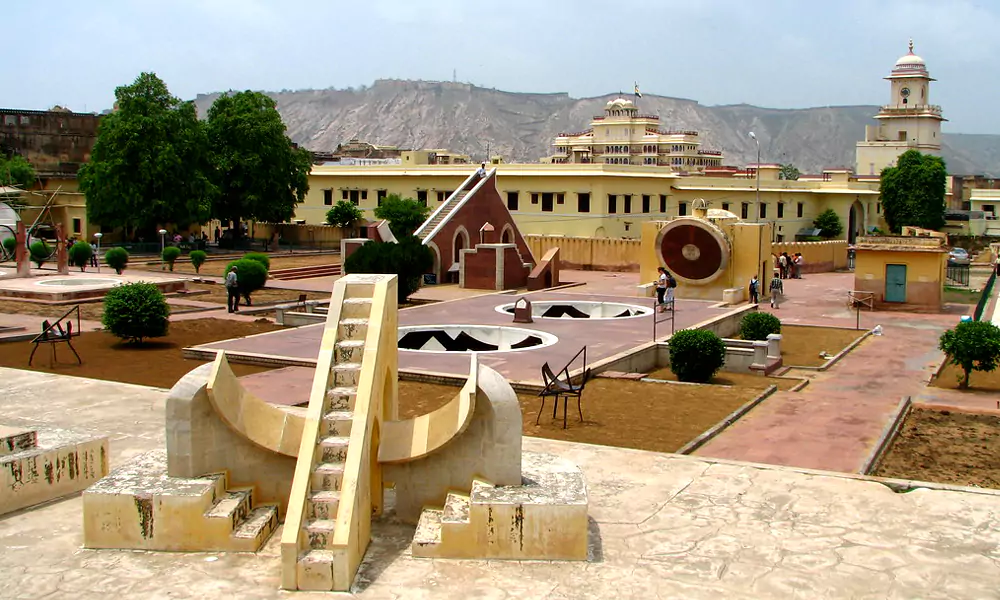
Planning to visit Jantar Mantar in Jaipur? This 18th-century astronomical observatory, built by Maharaja Sawai Jai Singh II, features 19 instruments used to measure time, track stars, and predict eclipses. It is also a UNESCO World Heritage Site and one of Jaipur’s top attractions.
What is Jantar Mantar Jaipur?
Jantar Mantar Jaipur is an 18th-century astronomical observatory built by Maharaja Sawai Jai Singh II, featuring 19 instruments to measure time and track celestial objects.

The Jaipur location of the observatory is among the five such observatories constructed throughout India and is also the largest and most well preserved of the five.
The observatory is equipped with a set of instruments that have been made of stone and marble and that were specifically designed to perform accurate astronomical calculations.
Who built Jantar Mantar Jaipur and when?
Maharaja Sawai Jai Singh II built Jantar Mantar Jaipur between 1728 and 1734 to improve astronomical calculations and observations.
Maharaja Sawai Jai Singh II, a ruler of Jaipur and a skilled astronomer, commissioned the observatory as part of a larger scientific initiative. He built five observatories across India, with Jaipur being the largest and most advanced.
The instruments were designed using knowledge from Indian, Islamic and European astronomy in order to accurately measure time, planetary locations, and eclipses as well as to create very precise instrument markings.
What Instruments Are Inside Jantar Mantar Jaipur?
Jantar Mantar Jaipur houses 19 instruments, including Samrat Yantra, Jai Prakash, and Rama Yantra, used for measuring time and tracking celestial bodies.
Key Instruments and Their Functions
- Samrat Yantra (Largest Sundial): The Samrat Yantra is able to measure the correct local time to within 2 seconds. Also, it is the most accurate measurement of any instrument at this observatory.
- Jai Prakash Yantra: This instrument determines the altitude and azimuth position of celestial objects using the two concave hemispheres.
- Rama Yantra: Cylindrical structures that can very accurately measure the altitude and azimuth of celestial bodies.
- Chakra Yantra: Uses an equatorial coordinate system to figure out celestial coordinates.
- Narivalaya Yantra: It has two sundials that can tell time in different ways based on how the Earth is tilted.
Jantar Mantar Jaipur Timings and Ticket Prices in 2026
Jantar Mantar Jaipur is open daily from 9:00 AM to 4:30 PM, and the tickets cost ₹50 for Indians and ₹200 for foreign visitors.
Ticket Prices
- Indian Citizens: ₹50 per person
- Foreign Nationals: ₹200 per person
- Students (Indian Citizens): ₹15 per person
- Students (Foreign Nationals): ₹25 per person
You have to pay extra for guided tours and photography permits. If you want to know the current prices and schedules for your trip, please check the official site or call your local tourism office.
Why Is Jantar Mantar Jaipur Important?
Jantar Mantar Jaipur is important due to its astronomical instruments and also because it has been listed by the UNESCO as a world heritage site that represents Indian science.
The importance of Jantar Mantar goes beyond what it has done for science. It stands for India’s rich cultural and intellectual history. The observatory is a sign of Maharaja Sawai Jai Singh II’s dedication and vision, and it shows how much he loved the arts and sciences as a ruler.
Jantar Mantar was named a UNESCO World Heritage site in 2010 because it is important for both history and science. It still attracts people from all over the world who want to learn about India’s ancient astronomical achievements.
What Is the Best Time to Visit Jantar Mantar Jaipur?
The winter season offers the most comfortable conditions to explore this open-air observatory. Jaipur experiences extreme heat during the summer, which makes walking between instruments tiring and less enjoyable.
- October to March (Best Season): Pleasant weather, clear skies, and better visibility of structures. Ideal for daytime exploration.
- April to June (Avoid if Possible): The site can get very hot, with temperatures over 40°C, which makes it hard to explore.
- July to September (Moderate Option): Occasional rain and humidity may affect your experience, but crowds are lower.
Best Time of Day
- Morning (9:00 AM – 11:00 AM): Lower crowds and softer sunlight for photography.
- Late Afternoon (3:30 PM – 4:30 PM): Better shadows on instruments, making them easier to observe and photograph.
Insight (Most Sites Miss This)
Most people spend 60-90 minutes on Jantar Mantar. Going during the weekday early in the morning will reduce the number of visitors to approximately 30-40% compared with going there on the weekend, thus improving your overall visit experience.
How to Reach Jantar Mantar Jaipur
Jantar Mantar is easy to get to because it is in the middle of Jaipur and is close to many different types of transportation.
- By Air: The nearest airport to Jantar Mantar is Jaipur International Airport, which is only 13 km away from the observatory. To reach the observatory by taxi or ridesharing, take a taxi or rideshare from the airport.
- By Train: The main train station in the city is Jaipur Junction, which is about 4 kilometers from Jantar Mantar. Many trains go to and from the station to major cities in India. To get to the observatory from the train station, you can take a taxi, an auto-rickshaw, or a public bus.
- By Road: Jaipur is easily reachable by road from many nearby cities and states. You can take the bus, a car, or a private taxi to get to Jaipur.
What Are the Top Places to Visit near Jantar Mantar, Jaipur?
Jantar Mantar is near several other iconic attractions, making it a part of a rich cultural and historical circuit in Jaipur.
1. City Palace Jaipur
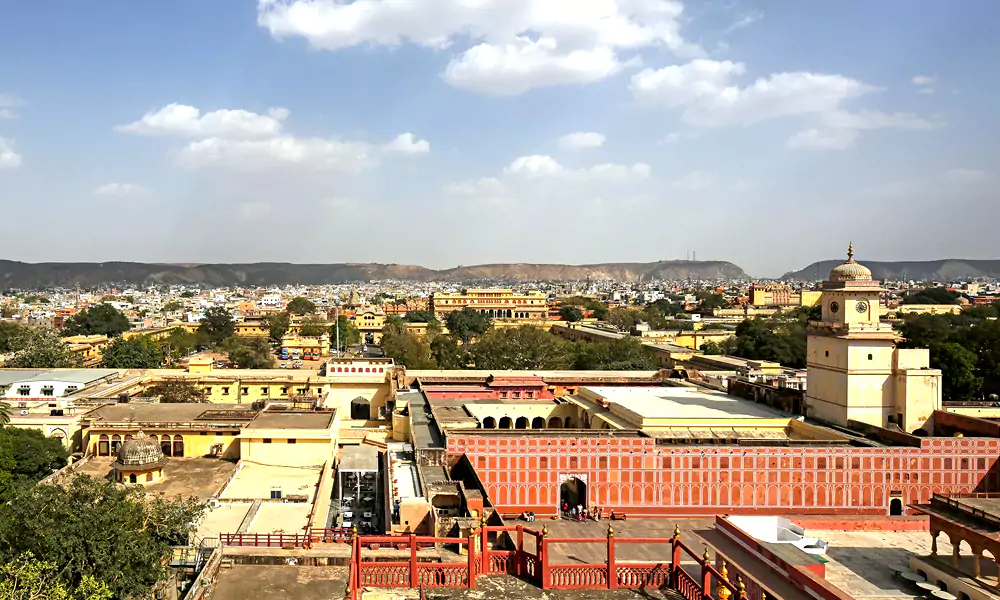
The City Palace Jaipur, a magnificent complex next to Jantar Mantar, was the Maharajas of Jaipur’s royal residence. It provides a window into Rajasthan’s royal past through museums, courtyards, gardens, and historical artifacts.
2. Hawa Mahal
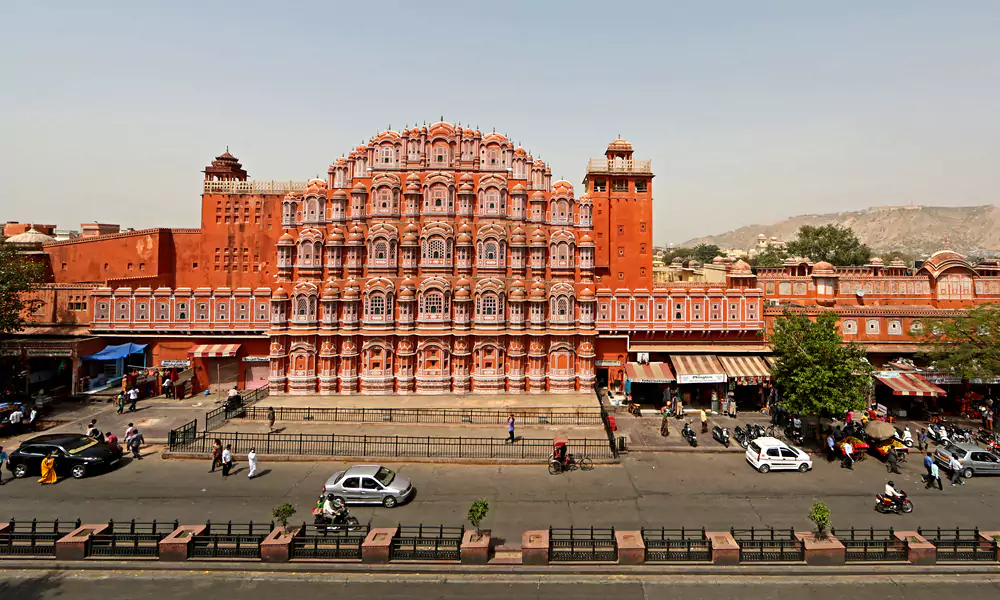
The Hawa Mahal, or “Palace of Winds,” is a stunning five-story palace known for its intricate latticework and unique architectural design. Royal women could enjoy street festivals unobserved from the building’s exterior.
3. Amer Fort
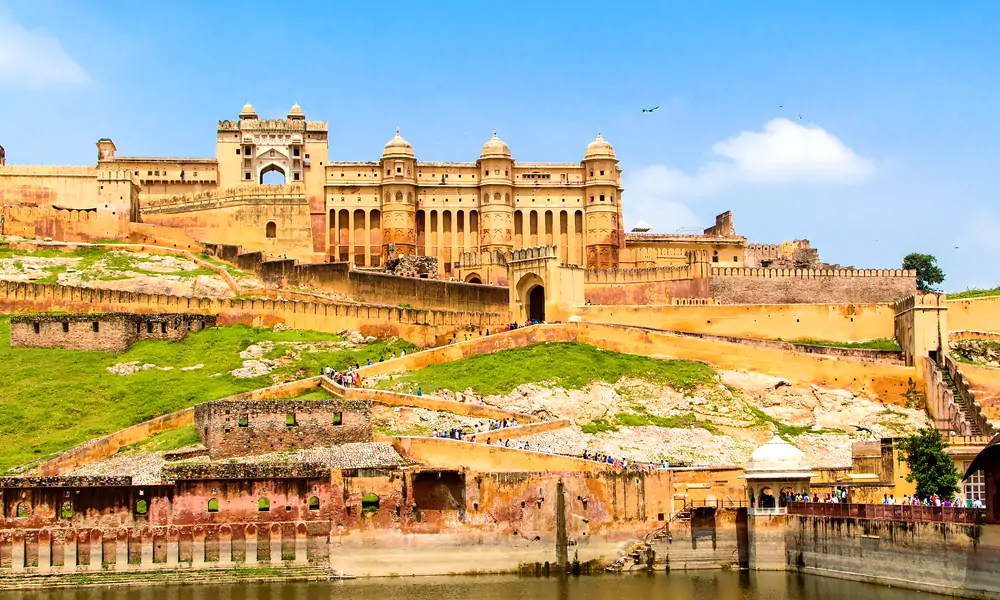
The Amer Fort is a large fort on a hill located around 11 km away from Jantar Mantar. The fort blends Rajput and Mughal styles beautifully. The area where it is built has excellent views of the landscape surrounding the fort as well as many beautiful palaces, temples and gardens.
4. Nahargarh Fort
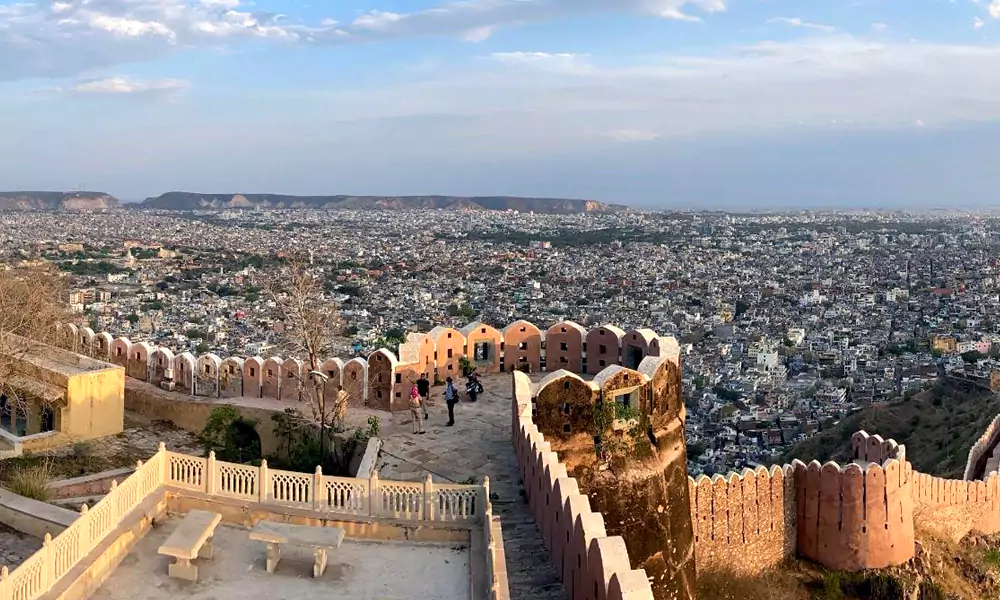
The Aravalli Hills are home to Nahargarh Fort, which has amazing views of Jaipur City. It was built as a retreat for the royal family and is now famous for its beautiful scenery and historical importance.
5. Albert Hall Museum
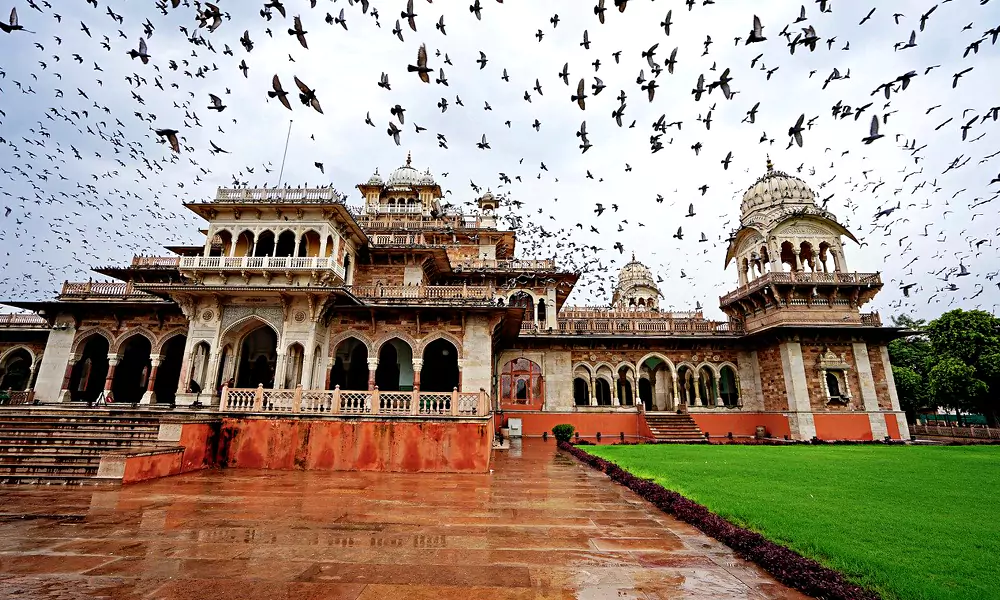
The Albert Hall Museum is the oldest museum in Rajasthan. It is in Ram Niwas Garden. It has a huge collection of artifacts, such as paintings, sculptures, textiles, and decorative arts.
What are Useful Travel Tips for Visiting Jantar Mantar Jaipur?
Visit Jantar Mantar Jaipur early in the morning, carry water, and take a guided tour to avoid heat, crowds, and confusion while exploring the instruments.
Smart Travel Tips
- Visit early (9:00–11:00 AM): Lower crowds and better focus; late visits increase fatigue and confusion.
- Choose a guided tour: Without explanation, instruments look like structures; a guide makes the visit meaningful.
- Carry water and wear light clothing: The site is open-air; heat reduces your energy and cuts your visit short.
- Limit your visit to 60–90 minutes: Beyond this, attention drops and the experience becomes repetitive.
- Visit on weekdays: Weekends are crowded, which affects movement and photography.
- Focus on key instruments, not all: Understanding 2–3 instruments deeply gives a better experience than rushing through all.
Conclusion
Jaipur’s Jantar Mantar shows off advanced astronomy skills in India with plenty of tools and practical design. Plan ahead of time to see some of the more important structures within the site and use a guide to understand their true value.
By visiting at the right time, you can enjoy both the scientific aspects and the historical significance.
Frequently Asked Questions (FAQs)
Jantar Mantar Jaipur was built by Maharaja Sawai Jai Singh II in the 18th century as an observatory to study the cosmos with 19 different instruments able to measure time and navigate the universe.
Jantar Mantar Jaipur opens daily from 9:00 AM to 4:30 PM, allowing visitors to explore its instruments during daylight hours.
The entry fee for Jantar Mantar Jaipur is ₹50 for Indians and ₹200 for foreigners, with discounted prices for students.
Most visitors take 60 to 90 minutes to explore Jantar Mantar Jaipur, depending on how interested they are in astronomy or if they have taken a tour guide.
This observatory is a great tourist attraction due to its interesting science devices, its rich heritage and because it is a UNESCO World Heritage Site.





























Leave a Comment